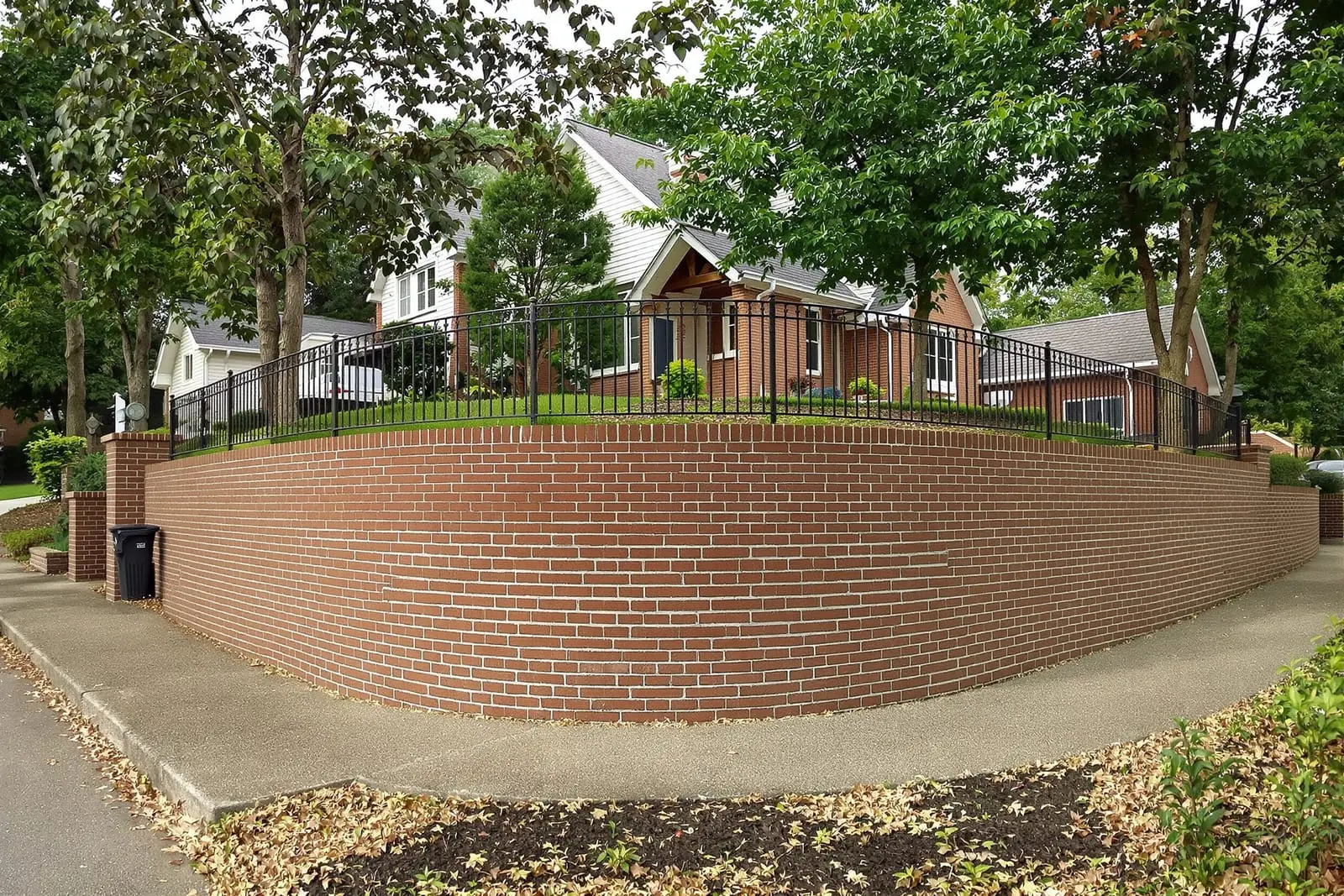
We design and build brick retaining walls in Miami, FL that manage grades while adding curb appeal. Our masonry retaining walls use proper footings, drainage, and reinforcement to handle soil pressure and heavy rain. Whether you need a low garden wall or multi tiered terraces, we tailor the layout to your landscape. Schedule a free on site consultation to plan your retaining wall project.
Vanguard Masonry Miami provides professional brick retaining walls throughout Miami, FL and the surrounding area. Our licensed, insured crew delivers safe, clean, on-time work with a free estimate before anything begins. Call (786) 460-2476 or request your free quote.
Brick Retaining Walls That Stand Up To Miami Conditions
Brick retaining walls in Miami have to do more than just look good. They hold back soil in heavy rains, deal with high humidity, and handle years of sun exposure. At Vanguard Masonry Miami, we design and build brick retaining walls that match the look of your property and are engineered for our local soil and weather.
Most of the retaining walls we build are used to control erosion on sloped yards, create level spaces for patios or parking, or clean up messy transitions between a higher neighbor’s yard and a lower one. In Miami, many older homes were built with minimal grading, so yards can shift and wash out over time. A properly built brick retaining wall locks that soil in place and keeps landscaping and hardscapes from sliding, cracking, or sinking.
We focus on structural performance first, appearance second. That means proper footing depth for our local soil, a drainage system that can handle sudden storms, and brick choices that will not fade quickly in our sun. Brick retaining walls cost more than simple block walls, but they give a longer lasting and more finished look, especially on visible areas near driveways, front entries, and pool decks.
How We Design and Build a Brick Retaining Wall
Every job with Vanguard Masonry Miami starts with a site visit. We check the slope, where water currently flows, how close the wall will be to property lines or structures, and what kind of soil you have. Miami soils can range from sandy fill to harder limestone near the surface, and the footing design changes based on what we find.
Once we understand the site, we set the wall layout with stakes and string. We mark the top of the wall, the bottom of the footing, and any step downs if the wall follows a sloped grade. For most brick retaining walls, we use a concrete footing below the frost line, even though Miami does not freeze, because we want a stable base below any soft topsoil or fill.
The footing is usually reinforced concrete. We excavate the trench, compact the base, place form boards if needed, and install rebar on chairs so it stays where it belongs in the concrete. After pouring and curing the footing, we begin constructing a structural wall, often using concrete masonry units (CMU) that are reinforced vertically and sometimes horizontally. The brick you see on the outside is usually a veneer tied to that structural wall, though for low garden walls we can use solid brick units.
We install weep holes and an internal drainage system before we close the back of the wall. Behind the wall we place filter fabric and a layer of clean drainage gravel, usually with a perforated drain pipe at the base that slopes to daylight or a drain outlet. Only once the behind-the-wall work is done do we backfill, compacting in lifts to prevent future settling that can crack or push the wall.
Brick and Finish Options That Work in Miami
The brick you choose affects both the look and the life of your retaining wall. At Vanguard Masonry Miami we guide you through realistic options instead of just showing a catalog and leaving you on your own.
For structural performance, we prefer clay bricks that are rated for exterior use and repeated wetting and drying. We avoid soft interior bricks and questionable reclaimed materials that can spall in our climate. Color-wise, many Miami homeowners choose lighter reds, buffs, and mixed tones that reflect heat and blend with stucco or paver colors already on the property. Dark bricks can look sharp but will absorb more heat, which is something to keep in mind around pool decks or kids play areas.
Mortar choice matters here too. We typically use Type S mortar for retaining walls since it holds up better to lateral pressure and moisture. Joint style affects drainage and cleaning. A concave joint is common because it sheds water and resists cracking. For modern homes we sometimes use a flush or raked joint, but we explain the tradeoff that slightly recessed joints can collect more dirt and will need more regular rinsing.
We can cap the wall with solid brick, cast stone, or poured-in-place concrete caps. In Miami, a slightly overhanging cap with a drip edge helps keep water from running straight down the face of the wall, which reduces staining and algae growth. For walls around seating areas, we often widen the cap so it can double as a bench top.
Costs, Common Problems, and What Drives the Price
Pricing for brick retaining walls in Miami varies based on several real factors, not just wall length. Height is usually the biggest driver. Once a wall reaches roughly 3 to 4 feet and up, engineering, reinforcement, and drainage requirements increase quickly. A low garden wall might only need a basic footing and unreinforced block core, while a taller wall near a structure will need rebar, grout-filled cells, and possibly an engineered design.
Access to the site affects labor. If we can bring a small excavator and concrete buggy right to the work area, your cost is lower than if everything must be hand-dug and wheeled through a narrow side yard. Ties into existing patios, fences, or stair systems also add complexity, because we have to protect what is there and often cut or modify slabs to integrate the new wall correctly.
Common problems we see on older Miami retaining walls include bulging in the middle, cracks near the ends, and water staining or algae along the face. Most of these issues come from missing or clogged drainage, backfill that was never compacted, or poor footing design on soft fill. When we estimate your new wall, we look for these issues on your property so we can avoid repeating the same mistakes. Sometimes the best money you can spend is on unseen items like drain pipe, gravel, and geogrid reinforcement behind the wall, because those are what keep the wall from shifting 5 or 10 years later.
We are always clear about what is included in our price: demolition of existing walls if needed, disposal, footing, block core, brick veneer, caps, drainage, backfill, and cleanup. If permits or engineering are required, we explain that upfront so you know what to expect for both cost and schedule.
Planning, Timing, and Working With Vanguard Masonry Miami
In Miami, the best windows to build brick retaining walls are typically late fall through early spring, when afternoon storms are less frequent and temperatures are a bit lower. That does not mean we cannot build in summer, but heavy rains can slow excavation and footing work. If you know you want a wall finished before the next rainy season, it is smart to reach out a few months in advance so we can plan around weather and any needed permits.
Before you hire any contractor, ask how they handle drainage, what type of footing they use for your soil, and whether the visible brick is structural or just a veneer over a core. A clear, specific answer is more important than a low price. If a contractor tells you that drainage is optional for a retaining wall that holds back a significant amount of soil, that is a red flag in Miami’s rain patterns.
When you contact Vanguard Masonry Miami, we walk the site with you and talk through how you use the space, where you see water collecting, and what you want the finished area to do for you. Some clients choose to combine the retaining wall with new steps, a raised planter, or a small patio to get more useable outdoor space out of one project. We can phase work if needed, for example building the retaining structure first, then coming back later for additional masonry features.
During construction we protect nearby plants and hard surfaces, set up clear material staging areas, and keep you informed about any surprises we find underground, such as old footings or utilities. Once the wall is finished, we explain how to keep weep holes clear, what kind of landscaping is safe to plant near the top of the wall, and what warning signs, such as new cracks or movement, you should watch for over time. Our goal is that your brick retaining wall looks like it has always belonged there and works quietly in the background for many years.
“
Professional brick retaining walls, done right the first time, quality materials, honest pricing, and results that last.